
SEO is not disappearing in 2026.
It is evolving into the operational infrastructure behind AI visibility, search discoverability, paid media efficiency, and predictable lead generation.
For years, businesses treated SEO as a ranking tactic.
A channel.
A checklist.
A traffic strategy.
In 2026, that mindset is outdated.
SEO is no longer just about ranking on page one of Google.
It is about becoming structurally visible across search engines, AI models, voice assistants, and digital ecosystems.
For B2B companies and service-based businesses, this shift directly affects lead generation, marketing efficiency, and long-term market visibility. Businesses investing in a structured SEO strategy are already adapting their digital infrastructure to this new search environment.
The Shift: From Rankings to Visibility Everywhere
Most companies are still asking:
How do we rank higher in Google?
The companies growing consistently are asking a different question:
How do we become discoverable, citable, scalable, and convertible across search engines and AI systems?
Modern SEO now sits at the center of four major forces shaping digital visibility.
1. AEO: Answer Engine Optimization
Search behavior has fundamentally changed.
Users no longer want a list of links.
They want immediate answers.
Answer Engine Optimization focuses on structuring content so it can be extracted and surfaced in:
- • Featured snippets
• Google AI Overviews
• AI-generated summaries
• Voice search responses
• Direct answer panels
To achieve this, websites must implement:
- • Clear information architecture
• Intent-driven content
• Structured formatting
• Question and answer frameworks
• Semantic clarity
Visibility today depends on how easily AI systems can retrieve, interpret, and present your information.
2. GEO: Generative Engine Optimization
Generative AI search engines rely on trusted and authoritative sources to generate responses.
If your brand is not structured properly online, it cannot be cited.
Generative Engine Optimization ensures your website:
- • Demonstrates clear topical authority
• Uses structured data and schema
• Builds high-quality backlinks
• Maintains consistent entity signals across the web
• Publishes authoritative reference content
Backlinks are no longer just ranking signals.
They are trust indicators used by AI systems to determine which sources to cite.
Authority is no longer optional.
It is part of the infrastructure required for modern search visibility.
For businesses that rely on regional visibility, Local SEO signals also play a major role in establishing authority and geographic relevance.
3. AIO: AI Integrated Optimization
Scaling SEO manually is inefficient.
Modern SEO integrates AI workflows, automation systems, and structured optimization processes to:
- • Identify search intent clusters
• Generate structured content drafts
• Optimize metadata at scale
• Improve internal linking
• Analyze performance faster
• Identify new search opportunities
AI does not replace SEO fundamentals.
It accelerates structured execution and scalable growth.
For many companies, this also means aligning SEO insights with Google Ads strategies to improve targeting and campaign performance.
4. SXO: Search Experience Optimization
Traffic without conversion is noise.
Search Experience Optimization aligns:
- • User intent
• UX design
• Page structure
• Conversion pathways
• CRM integration
• Lead tracking
Your website must do more than rank.
It must guide visitors through a clear, frictionless decision-making process.
In 2026, UX is not just design.
It is conversion logic.
Without proper conversion tracking systems, businesses cannot accurately measure marketing performance or lead quality.
Why This Shift Matters for B2B and Service Businesses
For B2B companies and local service providers, this transformation is critical.
If your:
- • Website lacks structured architecture
• Content is not aligned with search intent
• CRM does not capture structured lead data
• Conversion tracking is incomplete
• Paid advertising operates separately from SEO
• Local SEO signals are weak
Then your business becomes invisible to both search engines and AI systems.
Modern digital visibility is systemic.
SEO must connect with:
- • Google Ads
• Conversion tracking
• CRM workflows
• Lead qualification automation
• Data reporting systems
• AI search platforms
When these systems operate independently, growth becomes unpredictable.
When they operate together, growth becomes measurable and scalable.
Strong CRM integrations allow businesses to connect marketing visibility with actual lead generation and sales data.
SEO Is Now the Operating System of Digital Visibility
In 2026, SEO is no longer just a traffic channel.
It is the operating system behind modern digital visibility.
It powers:
- • AI search discoverability
• Google search visibility
• Paid media efficiency
• Lead capture infrastructure
• Conversion tracking
• Scalable marketing systems
SEO determines whether your business gets:
Found
Cited
Structured
Measured
Chosen
How AZL Approaches Modern SEO
At AZL Marketing, we build integrated marketing systems that combine:
- • Local SEO and national search strategy
• Paid advertising alignment
• Conversion tracking architecture
• CRM integration
• AI-powered automation workflows
• Content structured for AI search engines
Because visibility without structure is fragile.
And rankings without systems do not scale.
The Real Question for 2026
Stop asking:
How do we rank higher?
Start asking:
How do we build a system that makes our business discoverable, citable, measurable, and scalable across search and AI environments?
SEO is not shrinking.
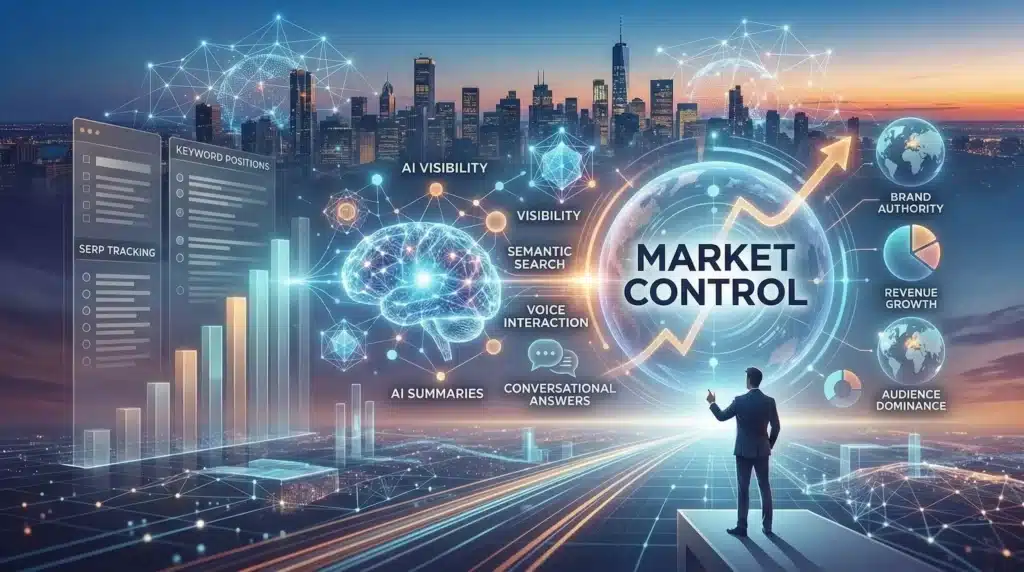
It is expanding into the foundation of digital market control.
If your marketing strategy does not reflect this shift, you are competing in yesterday’s landscape.